

You pick up the keys at Fiumicino, walk out to the lot, and find a white Fiat with a plate that reads something like FG 482 LK. Two letters, three numbers, two more letters. You will look at that combination maybe twice during your entire trip.
You should look at it more carefully than that. In Italy, the plate on your rental car is the thing that tolls, cameras, and municipal enforcement systems actually track. Not your name, not your booking reference. The plate. And because a rental agreement makes you responsible for what the car does while you have it, understanding that number is worth five minutes of your attention.
How the modern Italian plate works
Italy switched to the current format in 1994. Before that, plates included a two-letter province code in the main sequence, which is why older Italian cars in films carry numbers starting with RM for Rome or MI for Milan.
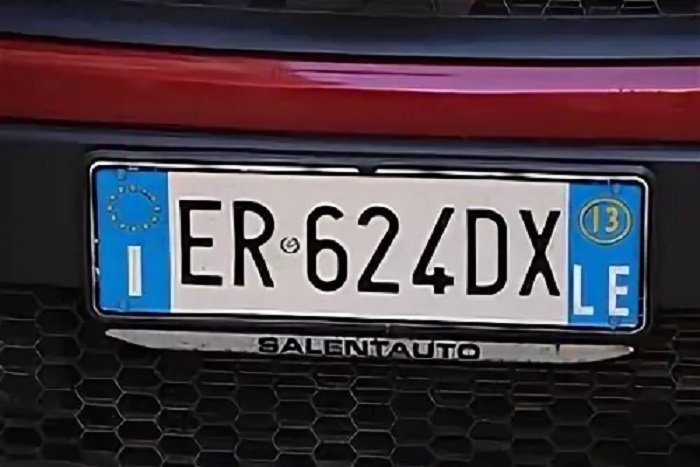
The system today is national rather than provincial. Plates are issued in a running alphabetical sequence, black characters on a white background, with a blue band on each side. The left band carries the EU circle of stars and the letter I. The right band usually shows the province of first registration in two letters, along with the year the car was registered.
That right-hand band is the part most visitors misread. It is not part of the registration number. If you are quoting your plate to a parking attendant or a police officer, you give the seven characters in the middle, nothing more. Certain letters never appear in the sequence, including I, O, Q, and U, because they are too easily confused with other characters.
One more thing that surprises drivers from the United States. In Italy, as in most of Europe, the plate belongs to the car rather than the owner. It stays attached through every resale for the life of the vehicle. The habit of taking your plate with you when you sell a car simply does not exist here, and the same principle repeats across most license plate systems worldwide.
Why this matters on your trip
Three situations turn plate awareness into real money saved.
ZTL zones. Almost every historic Italian city center is a Zona a Traffico Limitato. Access is restricted to residents and permit holders, and enforcement is automated. A camera at the entrance reads your plate, matches it against a permit database, finds nothing, and issues a fine. You will not see a barrier. You will not be stopped. You will find out about it months later when the rental company charges you an administrative fee and the municipality mails a notice.
Fines run from roughly 80 to over 300 euros depending on the city, and multiple entries mean multiple fines. The rental company passes them straight through, plus a handling charge for identifying the driver.
Before you enter any city center, look for the round white sign with a red border reading ZTL, and check the hours printed underneath. Many zones are active only during specific windows.
Autostrada tolls. Italy’s motorways are mostly toll roads with a ticket-and-pay system. Some lanes are Telepass only, marked in yellow. Entering one without a transponder means the gate reads your plate and bills the rental company later, again with a fee attached. Stay in the white lanes marked with cash and card symbols unless your rental specifically includes Telepass.
Parking enforcement. Blue lines mean paid parking. You enter your plate number at the machine in most modern systems, so have it written down or photographed. White lines are usually free but often reserved for residents in city zones. Yellow lines are reserved, typically for disabled permit holders, loading, or buses.
A small habit that pays off
Photograph the plate when you collect the car. Front and rear, along with the odometer and any existing damage. It takes thirty seconds.
That photo solves several problems at once. It gives you the exact number for parking machines, it proves what condition the car was in, and if a dispute arises over a fine you can show which vehicle you actually had and when. Rental companies are generally reasonable when you have documentation and considerably less so when you do not.
Reading other plates around you
Once you notice the format, Italian roads become easier to read. Commercial vehicles and certain categories carry different backgrounds. Mopeds and motorcycles use a smaller plate with its own sequence. Vehicles with red-bordered plates are on temporary registration. Cars with plates showing a different country band are foreign visitors, which explains a lot about the driving you will see on the A1 in August.
Italy is one of the more rewarding countries to drive in, provided you understand what the automated systems are watching. They are watching the plate. Now you know how to read it.